
7 Signs You Have a Water Leak in Walls | Tucson Homeowners Should Know
In Tucson, wall leakage often goes unnoticed for weeks since there is nothing noticeable to indicate that there is a problem. In the absence of any visible indicator, the damage caused by a leaking pipe often builds up until there is some sign on the outside. If you know what to look out for as signs of water leak in wall, you can prevent a minor repair from becoming a big job.
1. Your Water Bill Keeps Rising for No Reason
A water bill that goes up month after month with no change in how the home is used is one of the first signs of a water leak most Tucson homeowners miss. No extra laundry, no guests staying over, no new appliances but the number keeps rising.
A pipe dripping inside a wall runs water around the clock and that adds up fast over a billing cycle. Pull out the last three bills and look at the usage column. A steady climb with nothing to explain means water is going somewhere it should not.
2. Paint or Wallpaper Bubbling and Peeling Off the Wall
Walls do not get wet from the inside on their own. When a supply pipe behind the drywall develops a leak, moisture pushes through the wall material and works its way to the surface. Paint lifts, blisters, and peels away in patches with no clear cause.
Wallpaper behaves the same way edges lift and sections develop a soft, damp feel that comes and goes depending on how much water is behind it. Bubbling or peeling paint in a specific area with no recent water contact from the outside is one of the more visible signs of water leak in your home and usually means the leak has been going for some time already.
3. The Wall Feels Soft or Damp When You Press It
Dry drywall is firm. Press your hand flat against the lower section of a wall near the bathroom, kitchen, or laundry room and feel for any difference. A wall that gives slightly when pressed or feels cooler and softer than the surrounding area has absorbed moisture from somewhere behind it.
Warping or bowing along the baseboard is the same problem showing up at the bottom. Drywall swells when it holds water long enough and the shape changes in ways that are hard to miss once you know what to look for. These physical signs of water leak tend to appear before any staining reaches the surface.
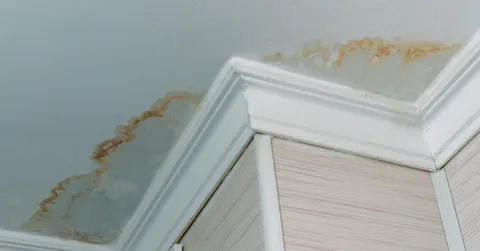
4. Brown or Yellow Staining on Walls and Ceiling
Water that soaks through drywall leaves mineral deposits behind when it dries, and those deposits show up as brown, yellow, or copper-colored stains on the surface. The stained area might feel dry right now but a dry stain does not mean the leak has stopped, it means the water dried after coming through.
Signs of water leak in the ceiling usually show up as discolored rings that spread outward from a center point. Each ring is a separate wet cycle. Three or four rings overlapping each other means that spot has been getting wet and drying out repeatedly, and the material above it has taken on a lot of water over time.
5. A Musty Smell in a Room With No Obvious Source
Mold does not need long to get started. 24 to 48 hours of moisture in a warm enclosed space is enough. The inside of a wall cavity is exactly that kind of space, and the smell comes before the mold ever becomes visible on the surface.
A damp, earthy odor in a room that has no wet towels, no drainage issue, and no reason to smell that way is one of the most reliable signs of a water leak in your home. Tucson homes that went through monsoon season with a slow pipe leak behind the wall often carry this smell for months before the drywall shows any sign of damage at all.
6. You Hear Water When Nothing Is Running
Go into a quiet room and just listen near an interior wall. A pipe leaking behind drywall sometimes produces a faint dripping or trickling sound, especially near bathrooms, behind kitchen cabinets, or along the laundry room wall where supply lines run.
That sound gets dismissed easily as the house settles or the water heater cycling. Shut off every water source in the home and stand near the wall again. If the sound is still there, water is moving through the line without being used and that is worth taking seriously.
7. Flooring Along the Wall Base Is Buckling or Discolored
Water behind a wall travels downward and eventually reaches the floor. Hardwood planks buckle and separate at the edges near the wall. Tile grout darkens and softens with moisture. Vinyl develops bubbles or soft patches right where the floor meets the baseboard.
Discoloration along the base of a wall or flooring that feels spongy close to the wall is a sign that water has been sitting at that junction long enough to work into the subfloor. By the time flooring shows these signs of water leak, the wall cavity above it has usually been holding moisture for weeks.
What to Do After You Spot These Signs
You have noticed some indication of a water leak in your house, which might be anything like a damp patch, increased water bills, or other strange behavior. What is first for you to do is go check the meter and turn all the faucets and appliances off. Then, pay attention to the small rotating disc within it, still moving? It implies water leakage.
Start by looking underneath the sink and at the bottom of each toilet and pipes if any. Not seeing any signs of a water leak anywhere apart from your meter rotating chances are the leak is located in the walls, and in such a case, call us at PlumbingWorksPro right away.
Why Tucson Homes Deal With Wall Leaks More Than Most
Water pressure in many Tucson neighborhoods sits higher than average and that puts constant stress on pipe joints and fittings over time. Older homes in the area still have original copper or galvanized steel pipes that have been in service for decades.
Galvanized pipes are the bigger concern they corrode from the inside out and look perfectly fine from the outside until a pinhole develops. That pinhole drips quietly inside the wall for months before any signs of water leak in wall work their way to the surface where they can actually be seen.
When to Call plumbing works pro in Tucson
A loose fitting under the sink or a running toilet are things most homeowners can handle on their own. Wall leaks are a different situation entirely. The pipe is not visible, reaching it means opening the wall, and cutting into the wrong spot makes the job bigger and more expensive than it needed to be.
Plumbing works pro uses detection equipment that finds the exact location of a pipe leak behind the wall without opening up large sections of drywall. Call plumbing works pro in Tucson when the staining keeps returning after painting over it, when the musty smell will not clear even after the area dries, when the water bill climbs for months with no explanation, or when the meter confirms an active leak but nothing visible shows up during a walkthrough. The sooner the source gets found, the less the overall repair costs.
Conclusion
Tucson wall leaks stay quiet until the damage is already done. Knowing the signs of water leak in wall , the bill, the smell, the soft drywall, the staining gives you a real chance to act before mold takes hold and the repair bill doubles. When the signs point to something behind the wall, Plumbing Works Pro covers all of Tucson and gets to the source without tearing up more than necessary.
FAQs
What are the first signs of water leak in wall in Tucson homes?
The earliest signs of water leak in wall are a rising water bill and a faint damp smell in a room, both of which appear before any visible staining or bubbling shows up.
Can signs of water leak in ceiling mean a wall pipe is leaking?
Yes, signs of water leak in ceiling like staining rings often trace back to a wall pipe or roof joint with water spreading outward through the ceiling material.
How do I know if signs of a water leak are serious in my Tucson home?
If the staining keeps coming back after painting, the smell stays after drying, or the meter confirms movement with everything off, the leak is active and needs a plumber.
How fast does mold grow after a wall leak in Tucson?
Mold starts forming within 24 to 48 hours in a warm enclosed wall cavity, which is why acting on early signs of water leak before mold spreads matters.